Tuesday, October 22, 2013

Sumo Athena stereo preamplifier

I had a minor dilemma. I use a Decware Zen Triode Select to power 105dB-sensitive Klipschorns with 2 watts a channel in my main set-up, and it has no phono stage. I've been trying to acquire an Apt Holman preamp, without success (seems they're highly-touted as a clean, versatile link between source and amp).

 
Sumo Athena preamp, pictured on top
 
So... after a pretty exhaustive search for the celebrated Apt Holman, I coalesced to an offer for the venerable Sumo Athena, readily available as well as highly regarded in its own right.
 
Reading the included manual, the Athena is best left on indefinitely, as the circuitry is thereby allowed to open up and bloom to its full audio potential. I'll admit that, after reading this and deciding to give the advice a try, I was a bit skeptical. Tweaks and electronic hoodoo like this are generally eschewed here at mind's eye music studios. Since it's generally accepted that tubes need to warm before really hitting their stride, I figured I'd heed the advice if it was worth suggesting in the first place.
 
The preamp has been on for about a week, and it sounds really clean and open, no considerable coloration, and presents Spotify and my file collection via JRiver Media Jukebox really well.
 
Now it's time for some vinyl.


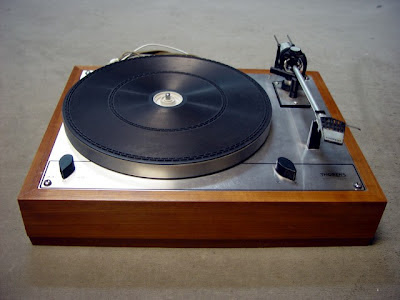
My record collection mostly consists of classic rock and pop, and I look for quality pressings and well-recorded and -mastered examples of the genre. My Thorens TD-165 (covered in these pages) is my second choice of 'tables for this task (Luxman PD277 being my #1), but clearly able to handle vinyl duties with the aforementioned components.

With a new stylus on my Pickering, I set out to find out if the Athena would live up to its hype. I started with Camel "I Can See Your House From Here", with lush orchestral rock at the forefront. Beautiful strings, synths, and a proggy approach to songwriting proved to be no problem for the Athena. "Who We Are", the standout cut from the LP, sounded beautiful and completely free of untoward artifacts. I knew we were getting there...

Rare Bird's self-titled first LP on Probe was next. Recorded with a different approach but equally as proggy as Camel, the organ took center stage, and shined wonderously. No hint of any thing out of order, just the customary surface noises that permeate the playing (unsignificantly so). The Pickering could only go so far to mitigate a bit of surface sound, so that was to be expected. The Luxman/Grado combo excels at quieting a record noticeably more so.

No tone controls, and a versatile but simple front panel layout offers options for recording and playback, and a switch inside selects MM or MC cart use. This preamp is well-designed with audiophile-grade electronics, and a stout build. Nothing flimsy here!

The Athena lived up to expectations, and played vinyl as well as files and streaming audio with no problems. Looks as well as functionality make the Sumo Athena a keeper here at mind's eye music. With dual outpus, biamping with external crossover is a breeze.
 
Keep your preamp on and your tunes up! Later! 


Saturday, October 19, 2013

"The Cardinals win the pennant! THE CARDINALS WIN THE PENNANT!!!"

Quoting the late, great Cubs/Cards broadcaster Harry Carey, it's hard to realize that, against the odds, with 20 rookies plated this season (an NL record), the Cards triumphed with a second year manager at the helm!

 
From Wikipedia:
 
On January 24, 2008, Mike Matheny returned to the St. Louis Cardinals organization as a special adviser for the first two weeks of spring training. The Cardinals announced him as the new manager on November 14, 2011 following Tony La Russa's retirement, making him the youngest manager in Major League Baseball.

On April 4, 2012, Matheny won in his managerial début against the Miami Marlins in the first game of their new ballpark. Twenty days later, Matheny was ejected from a game for the first time for arguing a pivotal safe/out call by umpire Bill Welke in the bottom of the 10th inning of a 3-2 loss to the Chicago Cubs. Matheny's first season as Cardinals manager was an overall success, finishing the regular season with a 88-74 record en route to capturing the wild-card game and qualifying for the postseason. However, they fell to the Giants in the NLCS.

On February 14, 2013, the Cardinals agreed to pick up his 2014 option. Matheny exceeded the success of his first managerial season by finishing the 2013 season with a 97-65 record and the National League Central Division title. The Cardinals beat the Pittsburgh Pirates 3-2 in the NLDS and beat the Los Angeles Dodgers 4-2 in the NLCS.

So, you see, Matheny is the man of the hour, his young team firmly and rightfully ensconced in the 2013 World Series, and it simply can't be disputed that St. Louis, MO is the best professional sports town with the greatest fans!

Just ask 20 rookies!

Keep your bats up and your balls down, Cards! See you in the Series!


Friday, October 18, 2013

McIntosh MC275 Tube Amplifier

From their website:

"An object of desire cherished by music lovers around the world, the MC275 was designed and engineered in 1961 by McIntosh co-founder Sidney Corderman and the McIntosh Engineering Team. Based upon the extraordinary Unity Coupled Circuit, the MC275 has lush sound that presents a powerful and detailed soundstage. Combining a polished Stainless Steel chassis with the latest vacuum tube circuit layout advancements move MC275 solidly into the 21st century. This amp gives new dimension to sound quality."

"The 50th Anniversary Limited Edition McIntosh MC275 combines modern convenience and performance enhancements without altering the sound character that has made it famous for the past 50 years. A very limited quantity of the special 50th Anniversary Limited Edition McIntosh MC275 has been created for only the most discerning of audio connoisseurs. Individuals who are fortunate enough to own the 50th Anniversary Limited Edition are certainly amongst the most sophisticated audio enthusiasts globally."

The MC275 has all the features to meet the needs of today’s music enthusiast, while preserving the qualities that have made it the most revered McIntosh tube amplifier.

This sixth generation MC275 has many subtle enhancements from the previous release that greatly improve performance. Combined with the widest bandwidth McIntosh output transformer design, the MC275 features tauter bass control and thermally quiet circuit design. The result is pure music.

McIntosh patented, gold plated, speaker binding posts assure the best connection, while high quality balanced and unbalanced input connectors enhance signal transfer.

The seven small tubes are LED illuminated to indicate the real-time status of the warm-up process: upon power up, they sequentially glow amber for a few seconds and then all turn green to signify system readiness. In the rare case of an output tube failure, the small tubes in front of it will turn red to notify you of the problem. Power Control is used to remotely control tube illumination from a McIntosh preamplifier.


I hate to say this, but I believe, now, after finally hearing this awesome instrument last night, that I've been to the mountaintop. I never thought a singular event such as this would so color (pardon the audio pun) my perceptions of what the best (cost versus performance) sound could actually be, that I actually figured I might never achieve the experience, much less ever own this piece of audio history. I WILL own one someday, and I DO believe the hyperbole expressed in the press blurb I quoted earlier. The game has changed until the 275 is a reality for me. No more lateral moves, amp-wise.
 
Here's the tech stuff, from Audio Classics:
 
This Amplifier was produced by McIntosh from May, 1961 through July 1973. The original Unity Coupled Circuit and McIntosh bifilar wound output transformer set a standard for low distortion performance back in 1947. The output transformer had two primary windings which are wound in a bifilar pattern. In this technique, both primaries are wound side by side. Each turn of primary number one is next to the same turn of primary number two. There is near complete magnetic coupling between the two wires. The magnetic coupling is reinforced by the capacitance between the two wires.

In the McIntosh Unity Coupled Circuit, one of the bifilar primary windings is connected through the power supply to the plate and cathode of one of the output tubes. The other bifilar winding is connected to the other tube in the same manner. This unity coupled output virtually eliminates notch distortion.

The MC275 used an advanced design of this technology by incorporating a trifilar wound primary to improve the power bandwidth. The third winding is connected to the plates of the cathode follower driver. Groups of interleaved primary and secondary windings improve coupling and bandwidth of over 100,000 cycles is achieved.
  • Tube Complement:
      Voltage Amplifier - One 12AX7 (drives both amps)
      Phase Inverter - Two 12AU7
      Drive Amplifier - Two 12BH7
      Cathode Follower Drive - Two 12AT7 or 12AZ7
      Output - Four KT88 or 6550
  • Selectable source input for Stereo, Twin-Amp or Mono operation.
  • Output is rated at 75 watts continuous per channel in Stereo or Twin configuration. 150 watts continuous mono.
  • Harmonic Distortion is less than 0.5% at rated output or less for 20Hz through 20kHz. Typical performance is 0.3% or less at 20Hz and 20kHz full power. Typical performance in the mid frequencies is 0.1% or less at full power.
  • Output barrier strips provide taps for speaker impedances of 4, 8 and 16 ohms stereo or 2, 4 and 8 ohms mono. The terminal strips may also be connected for a constant voltage output of 25 volts in either stereo or mono, or for 70.7 volts in mono. The secondary of the McIntosh output transformer may be operated either grounded or not grounded. If grounding is desirable, a wire may be connected between chassis and common of either or both output terminal strips.
  • An octal socket marked line output has connections for 70.7volts, 115 volts, 230 volts or 600 ohms for stereo 300 ohms for mono operation. The 600 ohm winding and the 300 ohm winding are balanced to ground. Pin 1 of the octal socket is the center tap for these windings and is grounded.
And more:

This Amplifier was produced by McIntosh from 1993 until 1996 to commemorate the late Gordon J. Gow, McIntosh President from 1989 until 1997, and Vice President since the inception of the company in 1949. Mr. Gow was the co-inventor of the original McIntosh Unity Coupled Amplifier circuit. He was also the person most responsible for the unparalleled success and reputation of McIntosh Laboratory as the manufacturer of the world's finest audio electronics.

The overall appearance of the commemorative MC275 amplifier is very close to the original. It has the same dimensions, chrome chassis and black transformer housings. Several changes were made to the original design to take advantage of newer technology and accommodate the needs of contemporary sound systems.
  • Gold plated XLR balanced input connectors were added on the sloping section of the chrome chassis. This allows the use of balanced interconnect cables for lower noise and improved signal transfer. The amplifier sensitivity at the balanced input jacks is fixed at 2.0V for rated output.
  • An increase in gain was necessary to accommodate the balanced inputs. Circuit changes were made for this purpose, resulting in the change of four vacuum tubes. Each 12BH7 was replaced by a 12AZ7 and each 12AU7 was replaced by a 12AX7.
  • Two gold plated RCA unbalanced input jacks were placed on the front of the chrome chassis. Above these input jacks on the sloping section of the chassis are corresponding left and right volume controls. The sensitivity at the unbalanced inputs, with controls set at maximum, is 1.0V for rated output.
  • Two slide switches were placed below the balanced input connectors. One switch selects balanced or unbalanced inputs. The other switch selects stereo or mono parallel configuration.
  • Gold plated high current output barrier strips were placed on the sloping section of the chrome chassis. Output taps were provided for speaker impedances of 4, 8 and 16 ohms stereo or 2, 4 and 8 ohms mono.
  • The octal output socket that originally connected to the high impedance (500 ohm) transformer tap was removed. The 3 position lever mode switch, stereo balance control, twin amp volume controls, mono volume control and the twin amp input jacks were also removed.
  • Close tolerance film resistors, polypropylene coupling capacitors and fiberglass printed circuit boards were used.
I said it once, and I'll say it again.

I've been to the mountaintop.

Thursday, October 17, 2013

"Music Matters" event, The Sound Room, Chesterfield, MO, 10-17-13

Man, these guys know how to throw a swank event. Slick eats, comp bar (!) and all the trimmings (live band, hors d'oeuvre girls, et al) made this annual do a must-go!

Where do I start? There were 4 rooms with different types of 2-channel rigs, and since this was geared to the music fan vs. their usual 5.1 crowd, there were some "interesting" demos going on at the end of the day and the beginning of the event. A fly on the wall (me) could hear a bit of the following:
 
"Can you imagine all that sound coming out of only 2 speakers?"
 
"Oh, yeah, that's vinyl, I heard that's making a comeback..."
 
"Turn that thing up, I wanna hear it LOUD"...
 
"Are those speakers supposed to have grilles?" to which was replied, "We think they look sexy without them..." You had to be there, it was hilarious!
 
So, as you could see, it took a bit before us vinyl-loving, no-5.1-having tubeheads had our way!
 
Once the thing got cooking (bar open, eats out, loosening of the collective "tie", as it were), all was right with the 2-channel audio world!
 
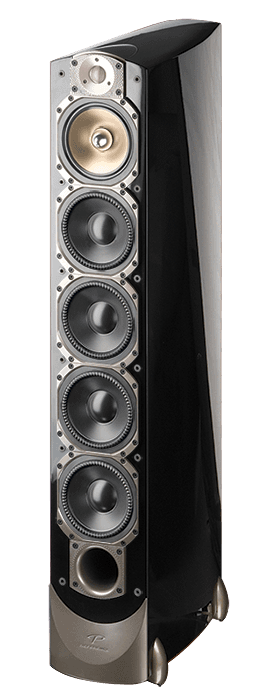
Room 1: McIntosh MC275 (I'm in love), McIntosh D100, MacBook Air/JRiver, Paradigm floorstanders
 
MC275 Tube Warm Up


Note: Paradigm speakers were said to be a new model between their Studio and Signature lines, with cones and surrounds from the Studio Series and motor assemblies from the Signatures, serial numbers 1 and 2.
 
Impressions: Mc, love. Paradigm, enough speaker to prove that this config was my favorite front-end, especially the classic 275.
 
Room 2: McIntosh MC303, McIntosh C48, McIntosh MVP891 Blu-Ray/CD player, Totem Element Earth loudspeakers


Impressions: Did I say I loved Mc? No need to repeat myself, their gear has made it EASILY into my favorite slot, price of course being a big consideration (despite the fact that I still can't afford them!)...
 
Speakers? These were my favorite, making this rig and speakers my favorite of the night, with nothing else even close. I could only DREAM of the 275, this preamp, Totems, and 24/192 files...
 
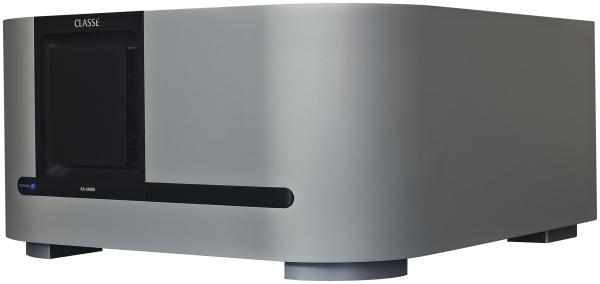
Reference room: Classe monsters, preamp (meh), some source, B&K 602 D2 speakers
 
802 Diamond
 
Impressions: Cold, analytical, hit me in the gut but not in the heart. Meh.
 
Drinks: 10.
Food: 10.
Band: 9.
Staff: Accommodating, friendly, professional, able to deal with the transition crowd well, loved us yobbos (I would have screamed at some of the 5.1 crowd).
 
Prediction: I met a friend of a friend who's going to Houston tomorrow to give a talk on a new audio format that's rumbling about, DSD. It will be better and bigger than lossless. I just have a gut feeling... If it is so, I WILL tell you that you heard it here first (not really, because I heard it through the grapevine already, I just didn't know my friend's friend was touting it for the manufacturers)! He describes it to me as the format that will do for lossless what MFSL did for vinyl (oversimplification of course).
 
 
Like Bomber and Hilly, keep your glasses raised and your zipper down (hey Prez, is that a sequester or are you just glad to see me?)...
 
See yas!


Thursday, October 10, 2013

100 posts!

Happy 100th episode! Someone's wheeling a big cake out from the other room, and my staff is surrounding me, giving me the glad hand!


I recently returned to blogging in these pages after nearly a year's layoff, and after cross-pollenating on audio forums and Facebook I've amassed a nice readership who keep returning for God knows why! I guess I'm picking somewhat LCD (lowest common denominator, obviously of some general interest) topics for various demographics.

Whatever which way, it's surely a way to keep me out of the types of trouble that suck me in.

Here's some comments from readers:

"I really don't like music" Jim Bates
"I hear distortion" Tony Arnett
"My brother turned you on to music. I'm gonna kick your ass" Greg Wills
"I'd rather sit at home and drink" Matt Daggett
"What are you doing this for? You're not getting paid" Lawrence Yaffe
"Animals are more important" Michelle Denis
"I guess you can't cuss on forums" Jeff Bonn

Now you know what I face everyday!


Keep your chicken wire up and your spit shield on (I just deleted a post from last year, so this is actually #99!).

Ha!

Wednesday, October 9, 2013

Wainwright advances Redbirds to 2013 NLCS with complete game victory


Hair helmet!


The Beatles "Revolver"

Once In a lifetime comes an album with this much gravity attached, with so much social import, that its influence cannot be underestimated on so many levels. This is a record that defies everything.

 
Revolver is the seventh studio album by English rock band the Beatles, released on 5 August 1966 on the Parlophone label and produced by George Martin. Many of the tracks on Revolver feature an electric guitar-rock sound that contrasts with their previous LP, the folk rock inspired Rubber Soul (1965). In Britain, the fourteen tracks from Revolver were released to radio stations throughout July 1966, "building anticipation for what would clearly be a radical new phase in the group's recording career".
 
The album reached number one on the British chart on 13 August 1966 and charted for 34 weeks. It also reached number one on the American chart and stayed at the top spot for six weeks. The album was remastered 9 September 2009 for the first time since its 1987 digital compact disc release. It was ranked number 1 in the All-Time Top 1000 Albums and number 3 in the Rolling Stone magazine's list of the 500 greatest albums of all time. In September 2013 after the British Phonographic Industry changed their sales award rules, the album was declared as having gone platinum.

"Eleanor Rigby"

"Eleanor Rigby" combines Paul McCartney's brand of lyrical imagery with a string octet (a conventional string quartet, doubled) arranged by George Martin under McCartney's direction. Both the lyrics and arrangement are a major departure from the Beatles' prior output.

Although Martin once pointed to Bernard Herrmann's score for Fahrenheit 451 as inspiration for the string arrangement, the film was not released until several months after the recording; Martin later stated he was thinking of Herrmann's score for Psycho. The compression and lack of reverberation given to the strings provides a stark, urgent sound that complements Martin's arrangement.

McCartney originated the song and the name, rejecting his initial choice, "Daisy Hawkins," in favour of a name derived from the Beatles' Help! costar Eleanor Bron and Rigby & Evens, a wine shop McCartney noticed in Bristol. McCartney initially named the clergyman Father McCartney, but changed it out of concern that the character could be misinterpreted as being the writer's father.

"Eleanor Rigby" is one of the few songs with lyric contributions from all four Beatles. John Lennon laid claim to "40 percent" of the lyrics (which was later disputed), including the line "Wearing a face that she keeps in the jar by the door", though those present at the writing dispute Lennon's claim. Ringo Starr contributed the line "Father McKenzie, writing the words of a sermon that no-one will hear", and George Harrison provided the "Ah, look at all the lonely people" hook.

The fact that an actual person named Eleanor Rigby is buried at St. Peter Church Cemetery, in Liverpool's Woolton, yards from where John Lennon and Paul McCartney met for the first time, is a bizarre co-incidence. Also bizarrely, the real Eleanor Rigby lived a lonely life similar to that of the person in the song.

"Eleanor Rigby" was released as a double A-side (with "Yellow Submarine") concurrently with the album.

"Tomorrow Never Knows"

The Beatles' unfolding innovation in the recording studio reached its apex with the album's final track. Lennon's "Tomorrow Never Knows" was one of the first songs in the emerging genre of psychedelic music, and included such groundbreaking techniques as reverse guitar, processed vocals and looped tape effects. Musically, it is drone-like, with a strongly syncopated, repetitive drum-beat played over a single chord. The lyrics were inspired by Timothy Leary's book, The Psychedelic Experience: A Manual Based on The Tibetan Book of the Dead, although the title itself was inspired by a Ringo Starr malapropism. The song's harmonic structure is derived from Indian music and is based upon a high volume C drone played by Harrison on a tamboura.

Much of the backing track consists of a series of prepared tape loops, stemming from Lennon's and McCartney's interest in and experiments with magnetic tape and musique concrète techniques at that time. According to The Beatles' session chronicler Mark Lewisohn, Lennon and McCartney prepared a series of loops at home, and these then were added to the pre-recorded backing track. This was reportedly done live in a single take, with multiple tape recorders running simultaneously, some of the longer loops extending out of the control room and down the corridor.

Lennon's processed lead vocal was another innovation. Always in search of ways to enhance or alter the sound of his voice, he gave a directive to EMI engineer Geoff Emerick that he wanted to sound like he was the Dalai Lama singing from the top of a high mountain. Emerick solved the problem by routing a signal from the recording console into the studio's Leslie speaker, giving Lennon's vocal its ethereal, filtered quality (Emerick was later reprimanded by the studio's management for doing this).

A key production technique used for the first time on this album was automatic double tracking (ADT), invented by EMI engineer Ken Townsend on 6 April 1966. This technique used two linked tape recorders to automatically create a doubled vocal track. The standard method was to double the vocal by singing the same piece twice onto a multitrack tape, a task Lennon particularly disliked. The Beatles were reportedly delighted with the invention, and used it extensively on Revolver. ADT quickly became a standard pop production technique, and led to related developments, including the artificial chorus effect.

Contributions and inspirations

Lennon's other contributions included "I'm Only Sleeping", "And Your Bird Can Sing", "She Said She Said" and "Doctor Robert".

On "I'm Only Sleeping", Harrison played the notes for the lead guitar (and for the second guitar in the solo) in reverse order, then reversed the tape and mixed it in. The backwards guitar sound has been said to "suspend the laws of time and motion to simulate the half-coherence of the state between wakefulness and sleep". The backwards guitar is mixed slightly differently on the American version, which is not included on the American Revolver but on Yesterday and Today.

According to Lennon, some of the lyrics of "She Said She Said" were taken almost verbatim from a conversation he had with actor Peter Fonda in August 1965, while he (Lennon), Harrison and Starr were under the influence of LSD at their rented house in Benedict Canyon (in Beverly Hills, California). During a conversation, Fonda said "I know what it's like to be dead," because as a boy he had almost died from a self-inflicted gunshot wound.


McCartney's "Got To Get You Into My Life" was influenced by the Motown Sound and used brass instrumentation extensively. Although cast in the form of a love song, McCartney described the song as an "ode to pot". It was released as a single in the US in 1976, ten years after Revolver, to promote the compilation album Rock 'n' Roll Music on which it appeared. (The vocal in the fade out at the end of the song is different on the mono version than on the stereo version. The last text line "What are you doing to my life?" can only be heard on the mono version).

McCartney mentioned in the 1989 radio series McCartney on McCartney that "Here, There and Everywhere" was inspired by the Beach Boys. The song was worked on following a Pet Sounds listening party in May 1966 where McCartney in particular was very affected by the album. Rolling Stone noted, "The tune's chord sequence bears Brian Wilson's influence, ambling through three related keys without ever fully settling into one, and the modulations — particularly the one on the line "changing my life with a wave of her hand" — deftly underscore the lyrics, inspired by Paul's then-girlfriend, actress Jane Asher.

McCartney also contributed "Good Day Sunshine", "Yellow Submarine" and "For No One", a melancholy song featuring him playing clavichord and a horn solo played by Alan Civil. He also played lead guitar on two tracks, one being a guitar solo on "Taxman" and the other being a dual guitar part with George Harrison on "And Your Bird Can Sing". The song "And Your Bird Can Sing" is supposedly primarily by John Lennon, however Paul McCartney claims to have helped on the lyric, estimating the song as "80–20" to Lennon.

Revolver was also a breakthrough for Harrison as a songwriter, and he contributed three songs on the album, including the opening track, "Taxman". The song was a protest against the high marginal rates of income tax paid by high earners like the Beatles, which were sometimes as much as 95 percent of their income (hence the lyric, "There's one for you, nineteen for me"). The "Mr Wilson" and "Mr Heath" referred to in the lyrics are Harold Wilson and Edward Heath, who were, respectively, the British Labour Prime Minister and Conservative Leader of the Opposition at the time. In the Anthology 2 version, the "Mr Wilson" and "Mr Heath" backing vocals were revealed to have originally been "Anybody got a bit of money" repeated rapidly.

Harrison also wrote "I Want to Tell You", about his difficulty expressing himself in words. "Love You To" marked a significant expansion of his burgeoning interest in Indian music and the sitar, which started with "Norwegian Wood (This Bird Has Flown)" on Rubber Soul. It was the intro to "Love You To" that was playing in the background when Harrison's character first appears in Yellow Submarine, the animated Beatles film released in 1968.

Ringo Starr's only lead vocal on Revolver is the childlike "Yellow Submarine". McCartney said that he wrote "Yellow Submarine" as a children's song for Starr to sing. With the help of their EMI production team, The Beatles overdubbed stock sound effects they found in the Abbey Road Studios tape library.


Heralding the psychedelic era

According to music critic Richie Unterberger of Allmusic:
In many respects, Revolver is one of the very first psychedelic LPs – not only in its numerous shifts in mood and production texture, but in its innovative manipulation of amplification and electronics to produce new sounds on guitars and other instruments. Specific, widely-heralded examples include the backwards riffs of "I'm Only Sleeping", the sound effects of "Yellow Submarine", the sitar of "Love You To", the blurry guitars of "She Said, She Said", and above all the seagull chanting, buzzing drones, megaphone vocals, free-association philosophizing, and varispeed tape effects of "Tomorrow Never Knows".
In 1972, Lennon offered some context for the influence of drugs on The Beatles' creativity:
It's like saying, "Did Dylan Thomas write Under Milk Wood on beer?" What does that have to do with it? The beer is to prevent the rest of the world from crowding in on you. The drugs are to prevent the rest of the world from crowding in on you. They don't make you write any better. I never wrote any better stuff because I was on acid or not on acid.
—John Lennon, The Beatles Anthology
According to music critic Jim DeRogatis:
Revolver, Pet Sounds and The Piper at the Gates of Dawn, relics of the first era of psychedelic rock and shining testaments to what can be accomplished in the recording studio when folks are fuelled on the potent drug of rampant imagination.
—J. DeRogatis, Milk it!: collected musings on the alternative music explosion of the 90s

Cover art and title

The cover illustration was created by German-born bassist and artist Klaus Voormann, one of the Beatles' oldest friends from their days at the Star Club in Hamburg. Voormann's illustration, part line drawing and part collage, included photographs by Robert Whitaker, who also took the back cover photographs and many other images of the group between 1964 and 1966, such as the infamous "butcher cover" for Yesterday and Today. Voormann's own photo as well as his name (Klaus O. W. Voormann) is worked into Harrison's hair on the right-hand side of the cover. In the Revolver cover appearing in his artwork for Anthology 3, he replaced this image with a more recent photo. Harrison's Revolver image was seen again on his single release of "When We Was Fab" along with an updated version of the same image.

The title "Revolver", like "Rubber Soul" before it, is a pun, referring both to a kind of handgun as well as the "revolving" motion of the record as it is played on a turntable. The Beatles had a difficult time coming up with this title. According to Barry Miles in his book Paul McCartney: Many Years from Now, the title that the four had originally wanted was Abracadabra, until they discovered that another band had already used it. After that, opinion split: Lennon wanted to call it Four Sides of the Eternal Triangle and Starr jokingly suggested After Geography, playing on The Rolling Stones' recently released Aftermath LP. Other suggestions included Magic Circles, Beatles on Safari, Pendulum, and, finally, Revolver, whose wordplay was the one that all four agreed upon. The title was chosen while the band were on tour in Germany late June 1966. They spent much of their time in their hotels in Munich, in a special train between Munich, Essen and Hamburg and in their Hotel Tremsbüttel outside Hamburg. The name Revolver was selected finally while in the Hamburg hotel as drafts proof.


Critical reception
The Beatles had initiated a second pop revolution – one which while galvanising their existing rivals and inspiring many new ones, left all of them far behind.
—Ian MacDonald, Revolution in the Head: The Beatles' Records and the Sixties
In a 1967 article for Esquire, music journalist Robert Christgau called Revolver "twice as good and four times as startling as Rubber Soul, with sound effects, Oriental drones, jazz bands, transcendentalist lyrics, all kinds of rhythmic and harmonic surprises, and a filter that made John Lennon sound like God singing through a foghorn." Rob Sheffield, writing in The Rolling Stone Album Guide (2004), said that the album found the Beatles "at the peak of their powers, competing with one another because nobody else could touch them", and concluded that, "these days, Revolver has earned its reputation as the best album the Beatles ever made, which means the best album by anybody." PopMatters said in a 2007 review that the album had "the individual members of the greatest band in the history of pop music peaking at the exact same time".

Accolades
In 1997, it was named the third greatest album of all time in a Music of the Millennium poll conducted in the United Kingdom by HMV Group, Channel 4, The Guardian and Classic FM. In 2000, Q magazine placed it at number 1 in its list of the 100 Greatest British Albums Ever. The same magazine's readers placed it at number 4 of greatest albums of all time in 2006.

In 2001, the TV network VH1 named it the number 1 greatest album of all time, a position it also achieved in the Virgin All Time Top 1,000 Albums. In 2002, the readers of Rolling Stone ranked the album the greatest of all time. In 2006, the album was chosen by Time magazine as one of the 100 best albums of all time. In 2006, Guitar World readers chose it as the 10th best guitar album of all time.

In 2010, Revolver was named as the best pop album of all time by the official newspaper of the Holy See, L'Osservatore Romano. In 2012, Revolver was voted 3rd on Rolling Stone magazine's list of the "500 Greatest Albums of All Time". In 2013, Entertainment Weekly named Revolver the greatest album of all time.
 
 
With all the accolades, with all the amazing music, and with the incalculable influence of the Fab Four at this pivotal time in their 7-year recorded history, it's easy to see why the Beatles are considered by critics and fans alike as THE one best band that ever dropped a note.
 
Unless Sinatra's your thing! (hehe).
 
Keep your mac cinched uptight and your hobnail books ashine! Sgt. Pepper's next in this series!


Monday, October 7, 2013

Road Trip #2 pending arrangements!


I'm in discussions on a follow-up review of yet another audio dealer nearby, details to follow.

I'll be reviewing the Merrill turntable, EAR amplification, and Vienna speakers!
 
I'm on super secret double probation till then, so don't ask!
 
If I told you, I'd have to kill you with a 5 hz sound bomb!


Stay tuned!

tc electronic Nova System guitar processor

I haven't done a pro audio review since I've returned, so I'll cover the tc electronic Nova System, a really versatile piece of kit, and very affordable for the collective punch it packs.


I've had quite a bit of time to digest just what the tc electronic Nova System can do, both onstage and in the studio, and it has proven to be quite the performer in its own right.
 
What makes the Nova System unique is that the distortion effects occur within the analog domain, and the parameters are accessed and stored digitally. This is due to tc electronic's NDT (Nova Drive Technology), and you can control the amount of distortion on the fly with an expression pedal!
 
Truly unique! From clean to heavy gain distortion with the sweep of an expression pedal!
 
Nova System is the obvious all-in-one solution for any guitarist (I'm a bassist, and I like it too!), as it features world-class reverbs, EQ, comps and modulation effects with no sacrifice of tonal integrity. 60 user presets and 30 factory settings provide the electronic guitarist the versatility and user-friendly interface that is needed for either on-the-fly tweaking or careful setting adjustments prior to and during a session or individual pass. Great SQ and immense versatility right out of the box insures a quick adjustment time, no lengthy menus, and on-the-fly performance ease.
 
Don't like presets? Simple. Tweak till you absolutely LOVE what you hear, store with a flick of a footswitch, and you're set. It's really that easy, and the combinations are nearly endless.
 
Features:
 
. All-analog overdrive and distortion under preset and expression control.
. 6 effect blocks taken directly from G-System (costing TONS more):
- Compression
- EQ & Noise Gate
- Modulation
- Pitch
- Delay
- Reverb
. 30 factory and 60 user presets
. Two footswitch layouts: preset and pedal
. Hi-Z and balanced input + balanced stereo outs
. Optional G-Switch for added control
 
So, for a measly price of ‎$499.00 (all the usual suspects), the tc electronic Nova System is the go-to device for world-class performance, built-like-a-tank reliability, and the absolutely fantastic, SOTA sound that tc electronic is well-known for.

Till next time, keep your tubes hot and your wireless antenna up!

I've made that mistake before (careless as it might seem!)...

Till next time, World!


Sunday, October 6, 2013

Some musical quickie suggestions

1) Airiel is an American shoegaze band from Chicago, Illinois, characterized by their melodic style.

Film School and Airiel: Live at Spaceland photo 2
 
Airiel was formed as Airiel Project One in 1997, in Bloomington, Indiana, by Jeremy Wrenn and former bandmate Shawn Delaney. This followed the break-up of Wrenn's previous shoegaze band, Black Olive, that released one CD called Verge. Airiel are currently signed to Highwheel Records, an independent record label.
 
Airiel released a series of EPs through Clairecords which were later re-released as a box-set entitled Winks and Kisses. In 2005, Airiel released their self-titled EP independently, and toured the eastern United States.

In 2007, the band recorded their debut full-length, The Battle of Sealand, which was released on Highwheel Records in August of that year.

2) The Laurels are a neo-psychedelic four-piece based in Lewisham, a suburb in Sydney's Inner West. They formed in 2006 after the members met through mutual friends at a silly hat party, each of them originally living in disparate parts of the East Coast of Australia. The band garnered critical acclaim in the Sydney live music scene after playing extensively throughout the latter 00's in both headline and international support slots before releasing their first 7" single Art School Girl/Wandering Star in 2009 and their full length Plains LP in 2012.

The-Laurels
 
3) Alpine, another Aussie-based band (Melbourne), have little available info, save the fact that their debut, "A Is For Alpine", is fantastic, and warrants inclusion in this discussion for that reason alone! 


Go get this stuff. It will be worth it!

Keep your tubes hot and your antenna up! Seeya!


Saturday, October 5, 2013

Hold The Presses! Audio late-breaking news!

Audio Woo Checklist

(attributed to Sean Adams, founder of SlimDevices)


You claim that an

( ) audible
( ) measurable
( ) hypothetical

improvement in sound quality can be attained by:

( ) upsampling
( ) increasing word size
( ) vibration dampening
( ) bi-wiring
( ) replacing the external power supply
( ) using a different lossless format
( ) decompressing on the server
( ) removing bits of metal from skull
( ) using ethernet instead of wireless
( ) inverting phase
( ) installing bigger connectors
( ) installing Black Gate caps
( ) installing ByBee filters
( ) installing hospital-grade AC jacks
( ) defragmenting the hard disk
( ) running older firmware

Your idea will not work. Specifically, it fails to account for:

( ) the placebo effect
( ) your ears honestly aren't that good
( ) your idea has already been thoroughly disproved
( ) modern DACs upsample anyway
( ) those products are pure snake oil
( ) lossless formats, by definition, are lossless
( ) those measurements are bogus
( ) sound travels much slower than you think
( ) electric signals travel much faster than you think
( ) that's not how binary arithmetic works
( ) that's not how TCP/IP works
( ) the Nyquist theorem
( ) the can't polish a turd theorem
( ) bits are bits

Your subsequent arguments will probably appeal in desperation to such esoterica as:

( ) jitter
( ) EMI
( ) thermal noise
( ) existentialism
( ) cosmic rays

And you will then change the subject to:

( ) theories are not the same as facts
( ) measurements don't tell everything
( ) not everyone is subject to the placebo effect
( ) blind testing is dumb
( ) you can't prove what I can't hear
( ) science isn't everything

Rather than engage in this tired discussion, I suggest exploring the following factors which are more likely to improve sound quality in your situation:

( ) room acoustics
( ) source material
( ) type of speakers
( ) speaker placement
( ) crossover points
( ) equalization
( ) Q-tips


Strange animal news from around the web

By Evann Gastaldo, Newser
 

 A fisherman in Belarus was bitten to death by a beaver, and all he was doing was trying to take its picture, Sky News reports.

The man spotted the beaver while fishing with friends at Lake Shestakov, but as he approached to take a photograph, the beaver bit him on the thigh. The animal managed to sever an artery, and his friends couldn't stop the blood flow.

Sky News helpfully reminds us that beavers can, of course, bite through trees.

Beaver attacks are rare, though, and when they do occur, rabid beavers are generally to blame (as in the 2012 attack in upstate New York ).

But just this week, a video was posted on YouTube showing a beaver going after a Russian man, reports the Telegraph, and two girls were seriously injured after being mauled by a beaver in Virginia last year.

In similar news with a happier ending, the AFP reports that a Komodo dragon "sunk its teeth into" an 83-year-old Indonesian woman on Tuesday -- but she was able to fend it off.


Police K9 Found Dead From Heat Stroke in Officer’s Patrol Car
 
By Brandy Arnold, Front Page News
 
 (disclaimer: not actual dog in story)
 
Officer Chad Berry of the Woodstock, Georgia Police Department is on paid administrative leave while detectives conduct an internal investigation into the death of his K9 police dog, Spartacus.

Spartacus, a 3-year old Belgian Malinois, was found dead around 9:00pm Monday night in the back of his handler’s car. A necropsy revealed that heat stroke was the cause of his death.

Officer Berry has been with the Woodstock Police Department for 9 years, having spent 7 of those years as a K9 handler. His first K9 partner, Atticus, is living with Berry as a family pet since retiring from the force.

A Pickens County Sheriff Dept. spokesman said investigators are trying to determine how long the dog was left in the car and whether Officer Berry will face criminal charges.


Loose Pig Leads Cop On 2-Hour Chase
 
WSVN TV-7 News


Police are trained for high-speed chases, but one Pinecrest officer surely never expected to have to run after a rebellious pig for nearly two hours (insert cop jokes here).

A 200-pound pot-bellied pig named Mud escaped from his enclosure at a Pinecrest home on Friday while the owner was asleep, WSVN reports.

After a neighbor, her nanny, three kids and a German Shepard failed to corral the escapee, it was officer Edison Cruz of the Pinecrest Police Department that finally captured Mud after about a two-hour chase through the streets, according to the Miami Herald.

"He was a good strong little pig there, Cruz told WSVN. "Put up a good fight."

The Herald reports that after finally pinning the beast, it took nearly half an hour for backup to arrive. Eventually, however, Mud did what all perps do: ride off in the back of a cop car, after which he was delivered back home unharmed.

 And hey, at least he stayed out of the water (unlike our friend below!)!

If I feature animals again, MY name will be Mud!


And there you have it!

Now, armed with all the news that's fit to print, until next time:

Keep your hog tied, your beaver beached, and your pooch properly penned! Woof!


Friday, October 4, 2013

Sharon Jones & The Dap-Kings

Sharon Jones & the Dap-Kings are an American funk/soul band. They are signed to Daptone Records, where the Dap-Kings are the house band. They are spearheads of a revivalist movement that aims to capture the essence of funk/soul music as it was at its height in the mid-1960s to mid-1970s. Part of the way this is achieved is to shun modern digital recording methods in favour of using traditional analog recording equipment.


Desco: the early years

The original incarnation of the band, the Soul Providers, were formed in the mid-1990s by Philip Lehman and Gabriel Roth, AKA Bosco Mann. The Soul Providers began recording an album consisting of James Brown-inspired instrumentals and vocal collaborations with Deep Funk legend Lee Fields. It was during these sessions that Roth and Lehman discovered vocalist Sharon Jones after she recorded backing vocals for one of the Lee Fields tracks. They were impressed enough to record a solo track with Jones entitled "Switchblade", a track that had originally been intended for a man to record. This track along with another Jones solo, "The Landlord", were included on the Soul Providers debut release Soul Tequila, released circa 1996 on the French label Pure Records (defunct). Lehman and Roth then started a new label in Brooklyn, New York. Desco Records was born taking its name from Desco Vacuum, a vacuum cleaner store in West 41st Street underneath which they utilized the basement as studio space and an office to administer and distribute the label. Sugarman 3 organist Adam Scone just happened to live upstairs in the same building. The Soul Tequila album was then reissued as a vinyl only LP renamed Gimme The Paw. The record, which featured Lehman's pet dog Spike on the cover, only kept one of the Sharon Jones collaborations, "Switchblade", omitting "The Landlord".
 
Having established a scene in New York of performers, Desco aimed to showcase a stable of artists with revue style shows and concentrated on releasing vinyl 45 records by a number of artists including Sugarman 3, The Daktaris, The Mighty Imperials, Naomi Davis & The Knights of 41st Street, Lee Fields, Joseph Henry and Sharon Jones, who backed by the Soul Providers who had become the Desco house band, released three 45's on the label. Desco Records were gaining intrigue and reputation for quality amongst soul/funk collectors and enthusiasts. Many people who bought the early records were unsure that they were modern recordings as recording dates were deliberately omitted from the labels and were often marketed as being released in the 1970s. Two other Soul Providers albums were released, an instrumental soundtrack to a mysterious Sam Lung Kung-Fu film, The Revenge Of Mr Mopoji, credited to Mike Jackson And The Soul Providers and a Lee Fields solo album Let's Get A Groove On where the Soul Providers provided the backing.

Daptone: a new label and the birth of the Dap-Kings

In 2000, due to a growing difference of opinion, Lehman and Roth decided to go separate ways and both set up new labels. Philip Lehman set up Soul Fire Records (now defunct, the back catalogue is handled by Truth & Soul Records). Gabriel Roth went on to start Daptone Records with Sugarman 3 saxophonist Neal Sugarman. The Soul Providers split and a new band, the Dap-Kings formed. The band consisted of label owners Roth, AKA Bosco Mann, on bass and Neal Sugarman on saxophone, plus original Soul Providers: guitarist Binky Griptite, organist Earl Maxton, percussionist Fernando Velez and trumpeter Anda Szilagyi. Joining them were original members of the Mighty Imperials whose album, Thunder Chicken, was the last release on the Desco label: tenor saxophonist Leon Michels and drummer Homer Steinweiss.

Having secured a summer residency at The Boite, a club in Barcelona, Spain, the band recorded an LP, Dap Dippin' with Sharon Jones and the Dap-Kings in 2001. A few hundred copies were pressed, so that sales during the residency would provide financial backing on what would have otherwise been a financially disastrous trip. With promotional copies reaching notable funk DJs and reviewers, the album gained a significant reputation and was officially released as the first LP and CD on Daptone Records in 2002 to universal acclaim amongst enthusiasts. In their review at the time, quarterly hip-hop and funk magazine Big Daddy (defunct) suggested that it might be the best new funk album ever, credited Roth with being "one of the best analogue producers there is" and stated "this LP is a major triumph and a new standard has been set".

Following the album, three 45s not included on the album were also released: "What If We all Stopped Paying Taxes", released in 2002 just ahead of the U.S. Election, was a militant anti-war statement denouncing the Iraq War. "Genuine (parts 1 & 2" (2004) was an uncompromisingly hard funk record which firmly kept the interest of enthusiasts. And their cover of "Just Dropped In (To See What Condition My Condition Was In)", released in 2005, was apparently recorded for a KFC commercial in 2002 but was never used.

Collaborations

The Dap-Kings were then hired as session musicians on a number of projects associated with New York based DJ/producer/recording artist Mark Ronson. Most notable of these is their extensive inclusion and somewhat unheralded contribution to Amy Winehouse's album Back to Black (2006). Six of the album's eleven tracks feature various members of the Dap-Kings with two notable hits from the album, "Rehab" and "You Know I'm No Good", extensively featuring the Dap-Kings. A further engineering credit goes to Gabriel Roth and several tracks recorded at Daptone Studios are mis-credited as "Dapking Studios". Again various members of the band feature on Ronson's second album, Version (2007), providing contributions on all but one of the album's fourteen tracks. The Dap-Kings then became the backing band used on Amy Winehouse's first U.S. tour.

In 2007 the Dap-Kings worked with British singer Ben Westbeech to record a new version of his song "So Good Today"; it was released to mark the first anniversary of Brownswood recordings, the label Westbeech is signed to in the UK. Sharon Jones lends her vocals on one song "The Way We Lived", on Wax Tailor's second album Hope & Sorrow, released in April 2007. Sharon Jones is also featured on releases by They Might Be Giants (The Else) and Rufus Wainright (Release the Stars).

Jones recently contributed six period numbers by Bessie Smith and others to the soundtrack for the film The Great Debaters, recorded in the legendary Ardent Studio in Memphis. Jones is also a featured on the Verve Records Baby Loves Jazz books/CDs and has even had her own character books published by Penguin Books in conjunction with the series, entitled Ella the Elephant: Scats Like That.

Sharon Jones and the Dap-Kings are featured on Michael Bublé's 2009 album, Crazy Love, in the track "Baby (You've got what it takes)". In the fall of 2009 Sharon Jones and David Guy appeared with Phish for their musical costume at Phish's Festival 8 in Indio California, where they covered The Rolling Stones' Exile on Main St..

The Dap-Kings horn section backed The Heavy in a January 18, 2010 appearance on the Late Show with David Letterman.

The Dap-Kings appear on the 2012 David Byrne and St. Vincent collaboration Love This Giant.

In October 2012, the Dap-Kings horn section also appeared with Muse on Saturday Night Live, providing support during their performance of Panic Station.

 
Sharon's vibrant delivery and electric performances with the Dap-Kings and her wide array of guest appearances certainly signify the return of soul singing (had it ever left?)...
 
That, in 2013, throwback music would be so popular and in-demand, warms this chronicler's heart.
 
Keep your dookie stick up and your hooptie shined! Aight?

Charles Bradley's Struggle To Sing

Charles Bradley's journey and ascent through and from a hard life to success in the music industry has been nothing but a long and tenuous climb, fraught with disappointments, one after another for decades on end. The one constant throughout his life is how those struggles shape his music.


Charles Bradley (born 1948, Gainesville, Florida, United States) is an American funk/soul/R&B singer, signed to the Daptone Records label under the Dunham Records division. His performances and recording style are consistent with Daptone's revivalist approach, celebrating the feel of funk and soul music from the 1960s and 1970s. One review stated that Bradley "echoes the evocative delivery of Otis Redding". Another astutue writer, not surprisingly, noted that his channeling of the late James Brown was "eerily uncanny".

He is the subject of an amazing documentary, Soul of America, that premiered at South by Southwest in 2012.


Early life

Bradley was raised by his maternal grandmother in Gainesville, Florida until the age of eight when his mother, who had abandoned him at 8 months of age, took him to live with her in Brooklyn, New York.

In 1962, his sister took him to the Apollo Theater to see James Brown perform. Bradley was so inspired by the performance that he began to practice mimicking Brown's style of singing and stage mannerisms at home.

When he was fourteen, Bradley ran away from home due to his poor living conditions -- his bedroom was in a basement with a sand floor -- and lived on the streets during the day and slept nights in subway cars for two years. Later, he enlisted in Job Corps which eventually led him to Bar Harbor, Maine to train as a chef. One time while working, a co-worker told him he looked like James Brown. When asked if he could sing, he was at first shy but eventually admitted that he could. He overcame his stage fright (when a crew member pushed him through the curtains onto the stage) and performed five or six times with a band. After his band mates were drafted into the Vietnam War, the act never re-formed.

Bradley worked in Maine as a cook for ten years until deciding to head west, hitchhiking across the country. He lived in upstate New York, Seattle, Canada and Alaska before settling in California in 1977. There, Bradley worked odd jobs and played small shows for 20 years.

Career in music

In 1996, Bradley's mother called him and asked him to move back in with her in Brooklyn so she could get to know him. It was there he began making a living moonlighting as a James Brown impersonator in local clubs under the name "Black Velvet." During this time, Bradley experienced more hard times, including almost dying in a hospital after being given penicillin (to which he has an allergy) and waking to the police arriving to the scene of his brother's murder just down the road from his mother's house.

While performing as "Black Velvet," he was eventually discovered by Gabriel Roth, co-founder of Daptone Records. Roth introduced Bradley to Daptone artist and his future producer Tom Brenneck, then the songwriter and guitarist for The Bullets, and later for Menahan Street Band, who invited Bradley to his band's rehearsal. Bradley asked that the band simply perform while he made up lyrics on the spot. After writing several songs, with Daptone releasing some of them on vinyl starting in 2002, ten were chosen and released as Bradley's debut album No Time For Dreaming in 2011.

In the spring of 2012, Soul of America, a documentary directed by Poull Brien, debuted at the SXSW Film Festival in Austin, Texas. Poull Brien first met Bradley when he directed the music video for "The World (Is Going Up In Flames)." This feature film told Bradley's story from his childhood in Florida, to the humble days of homelessness and heartache, then later his gigs as Black Velvet, and finally ended with him touring and recording at Daptone Records. The film went on to play prominent festivals around the world, and the story and legacy of Bradley continued.

Bradley's second album, Victim of Love came out on April 2, 2013.

Bradley's songs have frequently been sampled by hip hop artists, such as Jay-Z and Asher Roth.


Watching Charles perform, the pathos of life in a pressurecooker wears palpably on his personage, and, truly, it seems to pervade every aspect of his being, onstage and off. This is not an act, the facts bear that out, and as a result, Charles continues through this thing called life with one purpose: to succeed at a dream he's kept alive since being a young man in the turbulent 60's.

Now it's 2013, and the release of his critically-acclaimed second LP has brought him closer than ever to reaching this goal.

His aforementioned documentary is a MUST-SEE.

To be (thankfully and lovingly) continued...

Get on up, and stay on the scene, like a... you know.

Later!


Thursday, October 3, 2013

St. Louis Cardinals begin 2013 stretch run

Today kicks off the Cards' battle for the 2013 season's NLCS pennant, as they face their arch division rivals Pittsburgh in St. Louis' Busch Stadium. Mike Shannon and John Rooney will handle the radio chores as usual, while Dan McLaughlin, Rick Horton, and Al "The Mad Hungarian" Hrabovsky (think 70's long hair, Fu Manchu, and plenty of walking around, talking to himself and the mound) will do TV duties for today's festivities.

 
With the majestic Gateway Arch on the field and visible in the distance, this has to be one of the most picturesque views in all of sports. Old school ballpark architecture at its modern-day best!

Today's game's particulars:
 
First pitch: 5:07 p.m. EST
 
Adam Wainright (19-9, 3.30 ERA) takes the mound in the 2013 Central Division NLDS opener against the Pirates" AJ Burnett (10-11, 2.94 ERA).

Some cumulative stats for both teams for the 2013 regular season:
 
Runs: The Pirates scored 634 runs while St. Louis has drove in 783.
 
Batting average: Pittsburgh batted .245 while the Cardinals hit .269.
 
On base percentage: The Pirates are at .313 this season while St. Louis comes in at .332.

Slugging percentage: Pittsburgh is at .336 heading into today’s game while the Cardinals are at .401.

The St. Louis Cardinals fielded a major-league-record 20 rookie players this season. Mid- and high-level minor-league farmhands figured mightily in this all-time stat, making first-year manager (former Cards catcher) Mike Matheny immediately successful with such a ballsy (!) move over the course of the season.
 
The beautiful Birds On The Bat is one of the most iconic sports logos ever.

The new-for-2013 alternate home jersey (below left) is... (suffice it to say) ... interesting.

High Socks (pictured center) Sundays has been a great hit for STL fans at Busch Stadium.

The gray away uni (pictured right) features a complimentary alternate navy/red cap.


OUT!!!


First round action of the 2013 NL Central Division playoff series, leading up to the NL Championship Series, is scheduled for telecasts as follows:
 
Game 1: Pirates at Cardinals, 5 p.m. EST, Thursday, Oct. 3, TBS

Game 2: Pirates at Cardinals, 1 p.m. EST, Friday, Oct. 4, MLB Network

Game 3: Cardinals at Pirates, TBD, Sunday, Oct. 6, TBS 

Game 4: Cardinals at Pirates, TBD, Monday, Oct. 7, TBS or MLB Network (if needed)

Game 5: Pirates at Cardinals, TBD, Wednesday, Oct. 9, TBS (if needed)


Shortly after reporting to spring training in 2011, Cards' ace Adam Wainwright had experienced significant discomfort in his right elbow while pitching batting practice on February 21. Three days later, the Cardinals announced that Wainwright would miss the entire 2011 season––and possibly the first three months of the next season––after finding ulnar collateral ligament damage necessitating Tommy John surgery (TJS).

After successful rehab following TJS, he continues to be a major contributing force to the Cardinals, and an inspiration to his young teammates, as is Chris Carpenter, another longtime Cardinal starter/Cy Young winner/Tommy John survivor.

Go Waino! Perennial Cy Young Award candidate!!


Yadier Molina has been collecting defensive honors since the 2012 season ended.

Having already earned his fifth straight Gold Glove, Molina was announced as the National League's Platinum Glove Award winner at Rawlings' Gold Glove Award ceremony in New York City. The American League honor went to Texas third baseman Adrian Beltre. All of the Gold Glove recipients were eligible for the pair of league Platinum Gloves, with the two winners determined through fan voting. 2012 marked the second year that Rawlings has handed out a Platinum Glove.

Molina has taken home both NL honors.


Yadi (as he's affectionately known to his fans around the League) raps lyrics as well as he does baseballs (consistently among the batting leaders in the NL this year, as well as generally acknowledged as the best defensive catcher currently playing)! He invested in a fully-outfitted recording studio installation (tie-in!) from my friends in pro audio at Fairview Heights, IL Guitar Center a couple years ago!

Hip Hop Hurray!! And ya don't stop (and neither do we)!

Keep your bats up, and your pitches down, sports fans! And... GO CARDS!!!